
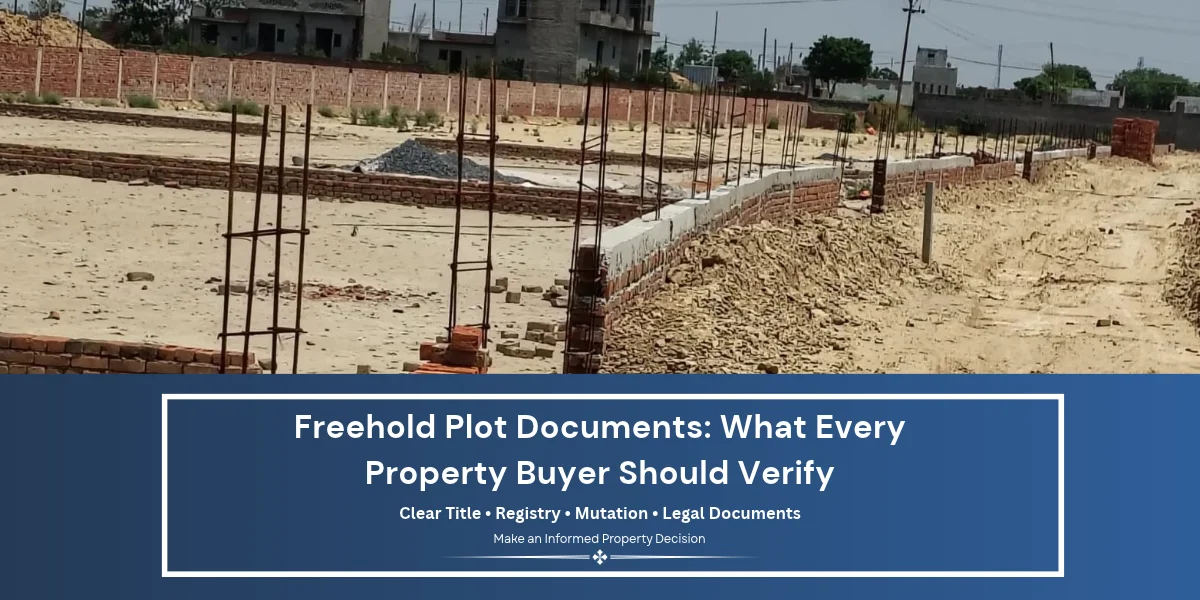
Buying a Freehold Plot is an important property decision, especially when the intention is to build a home or hold the land for the future. While location, plot size, connectivity, and price are important considerations, the legal documentation behind the property deserves equal attention. Proper document verification helps a buyer understand the ownership, status, and transaction history of a property before making a financial commitment. Whether you are considering a Freehold Plot in Greater Noida, Dankaur, or another developing location, taking time to examine the relevant documents can help you make a more informed decision.
Why Documents Matter When Buying a Freehold Plot.
A Freehold Plot represents an ownership interest in the land, subject to the applicable laws, records, land-use regulations, and property documentation. However, the term “freehold” alone should not be treated as sufficient proof of clear ownership.
Before purchasing a Freehold Plot, buyers should understand who legally owns the property, whether the seller has the authority to transfer it, whether the property has any recorded restrictions or encumbrances, and whether the plot details match the available records.
Proper verification is therefore an important part of the property-buying process.
Title Documents for a Freehold Plot.
The title documents are among the most important records to examine before purchasing a Freehold Plot. They help establish the ownership history of the property and provide information about how the current owner acquired the land.
A buyer should carefully review the available sale deed, previous title documents, and other relevant ownership records. The information should be consistent across the documents, including the owner’s name, property description, plot details, and relevant identification information.
If the ownership history involves multiple previous transactions, it is important to understand the chain of title rather than examining only the latest document.
For a high-value property transaction, professional legal verification can provide additional clarity.
Sale Deed and Registration Details
The sale deed is a key document in a property transaction. It records the terms under which ownership is transferred from the seller to the buyer.
When purchasing a Freehold Plot, buyers should carefully review the property’s sale deed and registration details. The plot description, area, boundaries, consideration amount, parties involved, and other relevant information should be checked carefully.
The registration details should also correspond with the property’s available records. Any major inconsistency should be clarified before proceeding with the transaction.
Mutation Records for a Freehold Plot
Mutation refers to updating the relevant land or property records to reflect a change in ownership. Depending on the local system and property type, mutation records can provide useful information about the recorded owner.
When evaluating a Freehold Plot, buyers should ask about the applicable mutation records and verify whether the ownership information is consistent with the other property documents.
Mutation by itself may not establish title in every legal context, so it should be considered alongside the property’s title and registration documents.

Land Use and Applicable Permissions
Before purchasing a Freehold Plot for residential purposes, it is important to understand the applicable land-use classification and development regulations.
A buyer should confirm that the intended use of the property is permitted under the relevant local rules. If the plot is part of a plotted development, the applicable layout approvals and permissions should also be examined.
This becomes particularly important when purchasing a Freehold Plot with the intention of constructing a residential property in the future. Construction may be subject to local building regulations, approvals, setbacks, and other requirements.
Encumbrance and Outstanding Claims
Another important consideration when purchasing a Freehold Plot is whether there are any recorded claims, mortgages, charges, or other encumbrances affecting the property. The buyer should seek appropriate documentation or verification regarding the property’s financial and legal status. If a property has an existing charge or claim, the situation should be clearly understood and resolved as required before completing the purchase. A professional property lawyer can help examine these matters and identify documents that may be relevant to the transaction.
Verify Plot Size and Boundaries
Documents should not be checked separately from the physical property. When buying a Freehold Plot, compare the plot’s documented area and boundaries with the actual site. Check the plot number, dimensions, frontage, depth, and surrounding boundaries. The information shown in the relevant documents and layout should correspond with the property being offered for sale.
A physical site visit is therefore an important part of the verification process. If there is a significant difference between the documents and the actual property, the matter should be clarified before proceeding.
Check the Developer or Seller Details
If you are purchasing a Freehold Plot through a developer, it is useful to understand the developer’s identity, project details, documentation, and transaction process. Buyers should ask for relevant project documents and clarify which documents will be provided during the purchase and registration process.
If purchasing directly from an individual owner, verify the seller’s identity and confirm that the person entering into the transaction has the legal authority to sell the property.
Keep the Complete Documentation Record
After purchasing a Freehold Plot, keep copies of all relevant documents in a secure and accessible place. This may include the registered sale deed, payment records, mutation-related documents, approved plans where applicable, tax records, possession-related documents, and other transaction papers.
Maintaining a complete record can make future property-related processes more organized and can be useful if the property is later transferred, developed, or otherwise dealt with.
Final Thoughts !
Buying a Freehold Plot should involve careful consideration of both the property and its documentation. A good location and suitable plot size are important, but clear ownership records and proper legal verification are equally significant. Before purchasing a Freehold Plot in Greater Noida or any other location, review the title documents, sale deed, registration details, mutation records, land-use information, applicable approvals, and any relevant encumbrance records. Also compare the documented plot details with the actual site. Most importantly, do not rely solely on verbal assurances or marketing information. Where required, take professional legal advice and complete the appropriate verification before making a substantial financial commitment. A well-documented property transaction provides a clearer foundation for future ownership and construction planning.